






Introduction
The impact of a shift in the cost of money can ripple far beyond institutions. An interest-rate decision can influence a lot of financial decisions, from household budgets to investment prices.
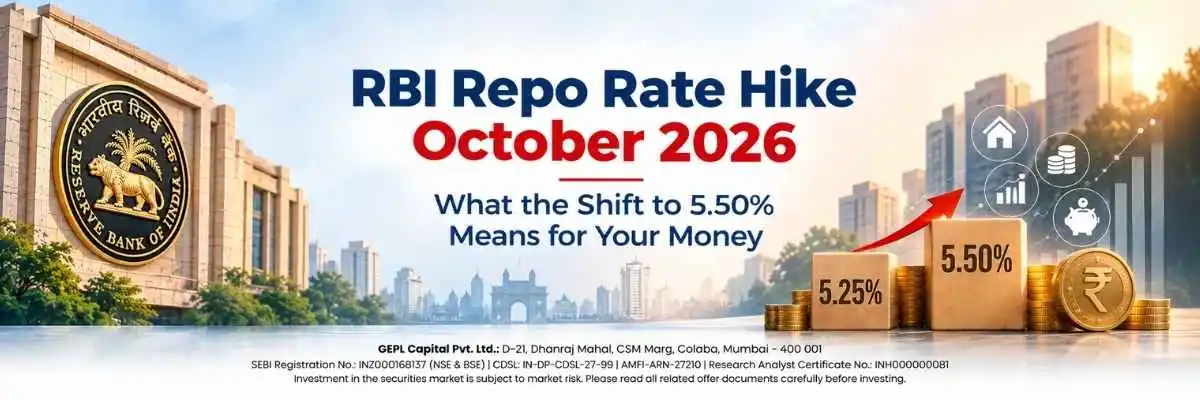
The Reserve Bank of India (RBI) raised the repo rate by 25 basis points to 5.50% on 7 October 2026, breaking a long streak of no hikes. The move comes on top of cumulative savings of 125 basis points in 2025 and four policy reviews at 5.25%.
For the ones monitoring the RBI repo rate hike 2026, the big issue is not just what has changed but why now, the central bank is taking this step.
Why RBI hiked rates?
Inflation is weighing on the economic prospects again.
Retail inflation in India accelerated to 4.82% in August from 4.45% in July 2026. Core inflation stood at 4.2%. Most crucially, the weighted fraction of products in the Consumer Price Index (CPI) that are experiencing inflation above 4% grew to around 37%.
This implies that price pressures are expanding beyond a few products.
When borrowing is expensive, a higher repo rate can assist restrain demand, which can help contain inflation over time. But it is a slow process and supply side constraints such as food prices and global energy prices may endure.
What are the signals of 'calibrated tightening'?
The RBI monetary policy October 2026 conveyed yet another crucial message – a move from neutral stance to calibrated tightening.
This isn’t a statement of a preordained succession of hikes. Instead, it leaves the RBI with latitude to tinker with rates more if inflation stays elevated.
Where the path of future interest rates in India will rely on inflation estimates, economic growth and external uncertainties.
Borrowers and investors should be mindful of policy changes but not take it for granted that there would be another rate hike.
How Rate Hike Could Impact Your Finances and Investments?
The home loan EMI impact may be seen when banks reprice floating rate loans, where eligible.
Depending on the loan agreement, the borrower may have to pay a higher monthly instalment, a longer payback time, or both. Existing fixed rate loans may not be affected immediately.
Depositors may find fixed deposit interest rates more tempting if banks decide to raise their offers. Different benefits will be available at different tenures of each institution.
Higher yield in financial markets is generally negative for existing bond prices which might affect debt mutual fund returns especially long duration funds.
The RBI rate hike impact on the stock market is less uniform. Firms with large debt obligations can see higher funding costs, while other industries might react differently based on business fundamentals and market factors.
Conclusion
Very recent RBI interest rate hike is more about vigilance on inflation and not about certainty of future policy movements.
A reasonable course of action is to reassess loan repayment conditions, maintain a reasonable emergency reserve and review if present investments are still appropriate to your financial objectives and appetite for risk.
In the event of interest rate changes, the we at GEPL Capital recommends investors to be guided by a sound financial strategy, well-informed decisions and a suitable risk profile.
Connect with us to review your investment portfolio and financial commitments to be better prepared to adjust to fluctuating market conditions.
Important Investor Information: Understanding investment risks is essential to making informed financial decisions. Please review the regulatory disclosures and investment risk disclaimer below before investing.
Read the Disclaimer Now and Invest Responsibly.